Saturday, August 24, 2013

Acknowledgements

I finished reading Liz Gilbert's Broken Spears a photo book about Maasai life in the first decade of the twenty first century. It's a beautiful book with amazing black and white photos, the majority taken on Kodak film. I turned to the last page of acknowledgements and on the left page it says, "Elizabeth L. Gilbert's travels across Maasailand were generously sponsored by Corbis and the Eastman Kodak Company."

Not very long ago Kodak's professional film division sponsored many photographers; supporting them in their journalistic and artistic endeavors with money, film, and film processing. I'm proud to have been part of an organization that helped connect people to each other and the world through powerful photographic images. Web sites like KickStarter now provide some financial support (I received Broken Spears by giving money to Gilbert's The Last Safari film project) but they require a lot of work, essentially an artist builds a marketing campaign usually with "gifts" that are made or purchased then shipped to people who pledge specific amounts of money. This new support for the arts is in some ways better (everyone, or at least those with money, can take part) and also worse (risky or unusual projects aren't likely to raise the money they need). Next week when Kodak ceases to exist it will be the end of the "Film Age" and the beginning of another age in photography. The next photographic age starts with amazing creative potential but it's hard to imagine smart phone manufacturers supporting professional photographers in the same ways that Kodak did.

You can still find the Kodak interview with Liz Gilbert on YouTube (and interviews with many other photographers as well).

Friday, June 7, 2013

Stop protecting me from terrorists

I just want to make it clear. I don't believe the U.S. government has protected me from a single "terrorist" since September 11, 2001. Since then the executive branch has seized a lot of secret power and violated the rights of U.S. citizens all in the name of protection. This is my public announcement that I'd prefer my right to privacy over a pledge of protection. There's no need for me to lay out all my reasons here when Conor Friedersdorf has already done it for me.

Sunday, December 2, 2012

Arrivals and departures

No U.S. airspace is more crowded right now than that around our bird feeder. Flights are coming in from as close as the Blue Spruces and as far away as the Cottonwoods. A rambunctious flock of Chickadees, Titmouses, Juncos, and a Nuthatch or two are ceaselessly arriving empty beaked then departing with a precious sunflower seed.

landing

Landing in the rain.

The resident pair of Cardinals drop in, each alternating between a turn at dominating the feeder and then on the ground keeping watch. They seem to be less an infatuated young couple than a middle-aged pair, a little wiser and more wary of the world's unexpected events whose outcome is unknown.

A vein of Gold Finches arrives. Taking up perches they raise their wings and beat the air at new arrivals until the would-be perch usurper departs. Momentarily at peace, they can snatch up a seed and gnaw the shell with their beaks until it cracks open.

Undesirables of the rodent and avian world join in. Squirrels hop around below the feeder rummaging through the accumulated layer of cracked shells and detritus for unopened seeds. Morning Doves wander in a meandering circle and peck with seeming little hope of finding anything. A gang of purple finches and anonymous bland sparrows arrive chasing the brighter birds away.

An interesting bit of drama on an otherwise dark and wet late autumn afternoon.

Friday, November 16, 2012

Congress: this time it's serious!

The U.S. Congress finally swung into action this week aroused by admissions of marital infidelity and the surrounding scandal. Like most Americans I was glad to see Congress take its oversight responsibilities seriously. We all know that a Congressional investigation into the Petraeus affair is of the utmost importance in these dangerous times.

And rightly so Congress will continue to ignore less important matters that at this point can only be distractions. For example investigating the President and Executive Branch for maintaining that the government can kill Americans without judicial due process. Everyone knows that the American public embraces this policy because the government can be trusted to only kill the right Americans.

Another minor irritation that troublemakers might harp on at this politically critical juncture is the growing use of drones over the United States by the government to spy on its own citizens. Congress is well aware that the only people bringing up this issue are those who obviously have something to hide. Their tired appeals for the respect of "civil rights" can't be seriously considered now, with the current state of the country.

Don't even get me started on people who want Congress to investigate the government programs that capture citizens' email messages and mobile phone conversations. Or war. Or voting rights.

We should all be thankful that the "do nothing" Congress has recently learned its lesson and that it will begin to probe deeply into the critical matter of juvenile female posturing and infidelity by males in powerful positions. Covered interminably by a 24 hour, hype driven, low information news media, I expect this matter will be investigated thoroughly by Congress until it has extracted the maximum political value.

Saturday, November 3, 2012

An update to Smashingline: web feeds

I added a new feature to my "internet property" Smashingline. You can now get updates when new race results are posted through a news reader like Google Reader. Web feeds are commonly known as "RSS" and are represented by a icon (technically RSS is a specific type of web feed and Smashingline uses Atom syndication).

Previously new race results were announced through Facebook and Twitter I added RSS because of changes made by Facebook to how items appear on people's "News Feed," you know the thing that used to be called your "Wall." If you used Facebook years ago you know that all your friends' posts used to appear there. When "Facebook Fan Pages" were added you could "become a fan" and all the page's posts also appeared on your Wall. Eventually Facebook changed "Wall" to "News Feed," those "Facebook Fan Pages" became "Facebook Pages," and instead of being a fan of a page you now "Like" them. But most crucially Facebook also decided that users were getting too many posts for them to peruse so they created "EdgeRank" which is an algorithm that attempts to filter incoming posts and only show the "most relevant" ones on a person's News Feed.

Since then Facebook has tinkered with EdgeRank attempting to find the optimal mix of posts you actually care about versus advertising. This tinkering has only accelerated since Facebook's IPO. This past September Facebook announced "promoted posts" where the poster pays to increase the likelihood that their post will appear in a News Feed. The converse is that if you don't pay your posts are less likely to be seen. The most insidious part of all this is that when people "Like" a Facebook Page most of them probably believe that they will get all of the posts from the page. Most of us thought that Like was analogous to "Follow" on Twitter, unfortunately that's not so and Facebook user's are probably not getting information from organizations they are interested in.

Since Smashingline does not make money I will not be paying to promote posts (in fact I have to pay Google every month for resource usage on their App Engine platform). RSS web feeds, a pre-Facebook part of the internet, are the solution to this problem. RSS takes away the power Facebook currently has over what information people see and puts it in the hands of people and the organizations they have a relationship with. It has been suggested that Twitter and Google+ are alternatives but they both have the same problem: ultimately another entity decides what information you get. With RSS there is no gatekeeper between a person and the information they are interested in.

There are a variety of news readers freely available. Google Reader is probably the most well-known. It is very easy to add a news feed to Google Reader and after that you won't miss information from web pages you're interested in. And if you have a web site or blog you should be sure that web feeds are enabled for it, your readers will thank you.

Tuesday, September 18, 2012

To Mister Romney and friends,

". . .he asked Jesus, 'And who is my neighbour?' Jesus replied, 'A man was going down from Jerusalem to Jericho, and fell into the hands of robbers, who stripped him, beat him, and went away, leaving him half dead. Now by chance a priest was going down that road; and when he saw him, he passed by on the other side. So likewise a Levite, when he came to the place and saw him, passed by on the other side. But a Samaritan while travelling came near him; and when he saw him, he was moved with pity. He went to him and bandaged his wounds, having poured oil and wine on them. Then he put him on his own animal, brought him to an inn, and took care of him. The next day he took out two denarii, gave them to the innkeeper, and said, 'Take care of him; and when I come back, I will repay you whatever more you spend.' Which of these three, do you think, was a neighbour to the man who fell into the hands of the robbers?' He said, 'The one who showed him mercy.' Jesus said to him, 'Go and do likewise.'"
- Luke 10:29

"There are 47 percent of the people who. . . are dependent upon government, who believe that they are victims, who believe the government has a responsibility to care for them, who believe that they are entitled to health care, to food, to housing, to you-name-it. That that's an entitlement. . . My job is is not to worry about those people. I'll never convince them they should take personal responsibility and care for their lives."
- Mitt Romney, Republican presidential candidate

I would like to tell you about one of the "47 percent" you were referring to, she is 40 years old and has never worked a day in her life. She is one of those Americans that has never paid taxes. The government pays some of her health care, food, and housing. That person is my sister. You should also know she can no longer walk, dress herself, feed herself, or communicate with her family. Her life has never been easy.

My parents realized years ago that eventually they would not be able to care for her and were fortunate to find a home for her run by the charity Heritage Christian Services (HCS). Now she has a larger family that includes her housemates and the people who care for her. Some of the money that keeps HCS going comes from the taxpayers of the state of New York. When I encounter people complaining about taxes I tell them that my sister depends on some of those taxes to maintain her house and have a decent life, and I thank them because they've helped make that possible. Another portion of HCS's money comes from very generous donors who believe in its mission: "A life of dignity, worth and expression to which all are entitled as God’s created children. This is their rightful HERITAGE."

No doubt your apologists will be quick to say that of course you weren't really referring to people who are disabled. Then which people were you referring to? The elderly poor? Disabled veterans? People who work one or two jobs just to have food and a place to live? The mentally ill, who often have no place to live and no one to treat them? These are the types of people that are part of those 47 percent. You've dismissed almost half of the citizens of this country as unimportant and not worth caring about. That made me angry. I decided I had to speak up for the most vulnerable people who often have no voice of their own. Those who aspire to be great American leaders should stand up for those that have the least, not inflict misery on them.

My sister has never voted, and will never vote. She is not capable of expressing her desires, wishes, or dreams. She is utterly dependent on others to care for her and advocate on her behalf. I wasn't very excited about the upcoming election since President Obama has failed to take many of the actions that I believe are in the best interests of the citizens of this country. But now that I know how you really feel about my sister and other less fortunate citizens in this country I'll be voting in November and I'll think about what's best for her while I'm doing it.

My sister arriving for Christmas.

My sister arriving to celebrate Christmas.

Tuesday, August 7, 2012

Prints can't be hacked

When Mat Honan's GMail, Twitter, and ICloud accounts were hacked he lost all the photos stored on his Mac, IPhone and IPad.

"My MacBook data — including those irreplaceable pictures of my family, of my child’s first year and relatives who have now passed from this life — weren’t the target. Nor were the eight years of messages in my Gmail account. The target was always Twitter. My MacBook data was torched simply to prevent me from getting back in."

Two factor authentication would have helped prevent his accounts from being compromised, but if your photos are important then you should make prints. Mat mentions the loss of these photos four times in his article, even asking the hacker if he feels remorse for causing them to be deleted. Obviously they were very important. Yes prints can be damaged or lost, but it's another preventive step in preserving the photos that are so important to you.

Thursday, May 24, 2012

HTML 5 adoption can't happen fast enough

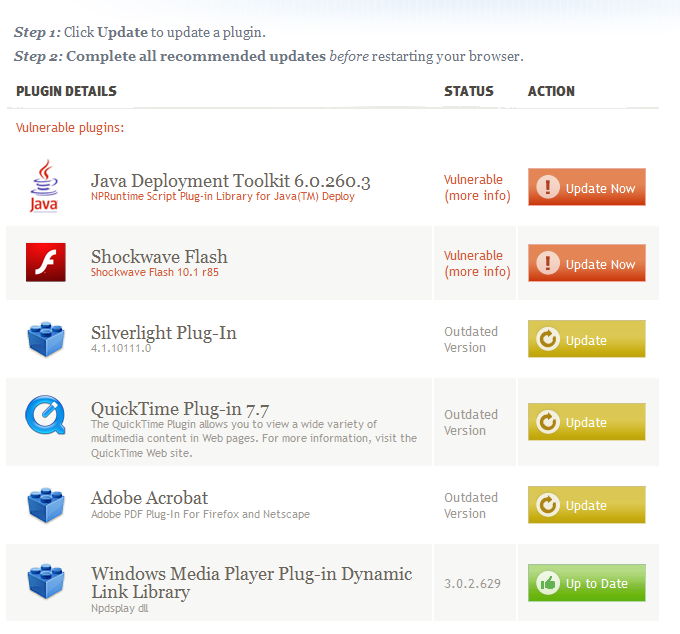
Firefox plugin page with a list of outdated or unsafe plugins. Each update requires navigation to a download page, choosing a download, waiting for the download, and finally waiting for the installation to finish. I know most of these have an "updater" but I really don't want services running on my machine contacting the mother ship willy nilly; that's so 2005.

Firefox displaying a list of outdated or unsafe plugins.

I don't use my computer so much as administer it.

Thursday, January 19, 2012

American success

I wrote this about two weeks ago but didn't publish it then because it didn't feel very personal, today I'm pulling the lever anyway.
Sunset over Kodak III

Sunset over Kodak III

By almost any standard Kodak has been hugely successful even if its present status is painful for current employees, like me, and investors. Kodak (for at least its first 115 years) grew from a small business into one the US's pre-eminent corporations. It is probably fair to say that George Eastman and his company built the modern city of Rochester. For the citizens of that city and the surrounding communities it provided good jobs for tens (hundreds?) of thousands of people. Mr. Eastman believed in research and development and for decades Kodak spent a lot of money on research, some of it commercially motivated, some "pure."

This is not to imply that there weren't problems; probably the largest that lingers is pollution from the first half of the twentieth century. Also for a long time there was discrimination against anyone that was not a white male, the only defense being that it probably was not unique to Kodak.

That said this is about successes. Kodak has been in existence since 1880. Studies analyzing the longevity of major modern corporations indicate that most last for a few decades before failing or being absorbed into another business. For most of Kodak's lifetime its stock was a solid investment paying generous and consistent dividends. It manufactured high-quality products used by discerning professionals in a variety of photographic fields. For much of the twentieth century any famous photograph or motion picture was probably made using Kodak products from film to paper to chemistry. The research labs consistently produced innovations in chemistry that helped Kodak create new products. If you wanted to do research in chemistry a job at Kodak meant access to first-rate labs without the need to deal with academic administration. Lately the story of Steve Sasson inventing the digital camera has gotten a lot of media attention and probably deservedly so, but Kodak's expertise in creating crystals and laying down lots of super-thin layers onto a substrate are probably its most important contributions to industry (and surprisingly relevant to manufacturing all kinds of films and flexible materials).

Philanthropically Kodak and its people have been a huge force in Rochester and around the US: George Eastman was an anonymous donor (until recently revealed) to MIT and other academic institutions. Without Mr. Eastman the University of Rochester, its dental school, The Eastman School of Music, the Rochester Institute of Technology, and the Eastman Theater either wouldn't exist or would be much smaller than they are today. Kodak's employees donated time and money to Rochester's United Way and many other local charities.

For those of us that work at Kodak and for prior employees the last ten to fifteen years have been very difficult. A lot of time has been spent inside and out of Kodak discussing who to blame for the decisions that have led to today's low stock price. But I have come to the conclusion that to a large degree Kodak's problems are photography's problems. In the early 1990s you would have needed amazing prescience to foresee how rapidly film would decline. The only popular digital media at the time was CD and those were for distribution of a heavily produced musical product, not a capture medium. Even as digital camera sales grew, changing to be a camera manufacturer would have been extremely difficult. Kodak only made cameras to sell film, and companies that made cameras often produced superior products. Kodak had imaging knowledge, but its R&D and manufacturing was oriented towards chemistry, not electronics (though it had some very smart people working on electronic imaging and amassed valuable intellectual property, e.g. the Bayer Pattern).

As of today the business and art of photography has undergone a very rapid and dramatic change. Photographers have a harder time attracting business and make less money from what they do get, often selling all the rights to the images, which would have been unthinkable 10 years ago. Some photographic manufacturers like Minolta have disappeared, put out of business by low-cost manufacturers in China and other parts of Asia. Even those manufacturers that still exist are under extereme pressure. Canon and Nikon make most of their moneu on low-end consumer cameras and those sales have been reduced because of mobile phone cameras. Probably the only businesses seeing growth in production are the manufacturers of phone camera assemblies, and I expect their profits per assembly are small.

So amidst all the bad news about Kodak it's worth remembering that Kodak did very well for a lot of people for a long time. I suppose that eventually businesses like human beings slow down and die, but we don't think of people as failures because they weren't immortal. We remember their vitality, and maybe even try to emulate their better traits. So I'd propose that despite the last ten years or so we remember that Kodak has been a phenomenal success.

P.S. This is not a eulogy for Kodak. I don't expect the company to disappear, but I do expect that the next Kodak will be very different from the one I grew up with and work for today.

Wednesday, December 28, 2011

Christmas Statistics

Statistics for photo Christmas cards and enclosed photos that I received this year.

Prints per paper manufacturer:

  • Fuji: 5
  • Kodak: 2
  • HP: 1

Square inches of paper per manufacturer:

  • Fuji: 108.5
  • Kodak: 26.25
  • HP: 24

Retailer:

  • studio: 4
  • Walmart: 2
  • Walgreens: 2

The smallest prints were made by photo studios and these accounted for all the Kodak prints. The largest prints were greeting cards made at Walmart and were on Fuji and HP paper.

This is consistent with my anecdotal observations of the past several years. Most of them appear to have been made in a store rather than ordered online. Draw your own conclusions.

Monday, October 17, 2011

Smashingline

I started working on Smashingline five months ago. Smashingline is a website that displays results from races. Most of the results are for footraces but there are some triathlons and a bike race or two.

For about two years I had wanted to build some sort of web property (a web site or a web app) as a way to demonstrate that I could build the frontend, backend, and an API to glue the two parts together. At the beginning of May of this year following a race that Sarah and I had both run we were discussing how tedious it was to download race results and create charts in Excel to get a better idea of how we did in the race relative to the other runners. I casually remarked that this seemed like something that would be helpful if it was online. As the thought formed I realized that this idea was a good candidate for the web site I was looking to build. I did a few quick searches but didn't find anything like it; I did turn up a variety of race results web sites, but at best they showed a table of results with a row for each runner. This presentation of data didn't (and still doesn't) give you any deep understanding of how you did compared to anyone else. A week later we were on vacation in Maine when I started putting the website together at the Maine Grind.

I made a few key decisions fairly quickly; first I chose to develop on Google's AppEngine. The reasons were entirely pragmatic: I already had the development environment including Eclipse and its AppEngine plugin installed and configured on my laptop. Second the project would be coded in Java. Since Java is very similar to C#, which I use daily at work, the learning curve was not very steep. In making these choices I had to balance conflicting desires: getting the website up and running as quickly as possible against learning a new language like Ruby or Python and an associated platform like Heroku or Amazon's AWS. In the end I decided that "shipping" the finished product was more important than academic pursuits. By the end of the vacation I had a working prototype.

Unlike the weekend projects you can often find posted to Hacker News I have probably spent about 140 hours on Smashingline. That time includes both writing code and uploading race data. About two months in to the project and with several races on the website I realized that I needed to make major changes to the way that race information was organized in the DataStore (Google's version of a database). It was taking too long to get information out and Google was changing the pricing model for AppEngine which would raise the cost of Smashingline from $0 per week to about $10 per week. Once I successfully completed those changes the site was much more responsive and the costs fell well below AppEngine's free quotas. Since then other changes have been relatively easy: adding "Like," "+1," and "Tweet" buttons to the front page and the results page for each entrant so they can share them with friends. Adding Google analytics and opening webmaster accounts at Google and Bing. Settling on the name "Smashingline" buying the domain and configuring DNS. Creating a Smashingline page on Facebook and opening a Smashingline account on Twitter. Of course there's always bug fixing and a whole host of minor improvements like a feedback form so people can suggest races for inclusion on the site.

The biggest challenge to the site going forward is the continued availablity of race data. Right now most race data on the web is an HTML table or a table embedded in a PDF file. But some of the results are only available through websites that display information for a limited number of runners at a time and they require the user to "page" through the information if they want to see all of it. Race result data, acquiring and arranging it for use on Smashingline, deserves to be the subject of its own post.

For now I have a growing backlog of features to add and not enough time to do them. Beyond that if the site is to thrive I have to deal with a variety of issues: it takes considerable time to properly format race results so they can be added to the DataStore, if the site's popularity grows data formatting will consume all of my available time (and more). Also as site usage increases its costs grow. Currently there is no advertising but that can't continue when the site exceeds AppEngine's free quotas. If ads become necessary I'd like to keep them as unobtrusive as possible. There is very little publicity for the site. Improving the site's visibility is probably more important than almost anything else, even greater than implementing new features. There is definitely a need to build relationships with race directors and other people and groups that organize races.

It's been an interesting almost six months of code hacking on vacations, nights, and weekends. If it's really true that most web sites and applications become an overnight success in about two years then I only have 18 months to go!

Tuesday, September 6, 2011

ToDo

I've heard that one of the keys to success is a todo list. This is mine, in no particular order:

Travel to South America

Travel to Antarctica (then I'll have bagged all seven continents)

Learn to play guitar

Learn to speak another language fluently (French preferred)

See a leopard and black rhino in The Mara

Create a trust fund to help educate more teachers and engineers that want to protect the environment

Get a better profile picture for Facebook

Have dinner with Sarah in that little cafe in Cassis on the Mediterranean coast of France enjoying a glass of wine as the Sun is setting

Write and publish a book

Publish a photo book of my own pictures (yes a coffee table book)

More blog posts for Deeloggee and Subv3rsicon (and better publicized)

First acquire hospital maternity equipment here in the States and second get it successfully to the Aitong health clinic in Kenya to save the lives of more mothers and their babies

Same for dental equipment. Right now their only treatment is to pull teeth.

Edit and print my backlog of "art" photos from the last twelve months

Use my meager software hacking skills to do something that makes the world a better place instead of just consuming resources

Take a wheel pottery class

Build shelves in the garage

My understanding of physics is pretty bad, need to improve it

Write a blog post

Sunday, April 3, 2011

The danger of running

"I wished to live deliberately, to front only the essential facts of life, and see if I could not learn what it had to teach, and not, when I came to die, discover that I had not lived."
- Henry David Thoreau

I was not a runner in school. I learned the danger of running later when I already had hardened habits and constricted thinking. The many physical hazards of running are well known: drivers who accelerate right into you without looking, snow hiding a sloped shoulder edge so that one misstep sends you crashing to the ground, a crowded race where it's easy to fall off an unseen curb tearing muscle and skin. But the real danger is more subtle:

  • Run one mile without stopping.
  • You can probably run two miles, and you do.
  • You run four miles. Most people tell you they can't imagine running so far.
  • Run ten miles then do it again but faster. If you can run ten miles what else can you do?
  • Run a half marathon. If you did that, who knows what your limit is?
  • You believe you can run a half marathon. It takes work but you do it.
  • You know you can do a marathon so you do.
This is the true danger of running. Because soon your life isn't framed by the words, "I can't do that." Instead it unfurls before you like an open road, or path, or trail, and you think, "What can't I do?" Open the door and go out; I've learned it's always a good day for a run.
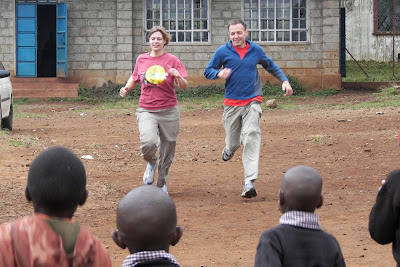
For Sarah, who started me running. Racing in Kenya.

For Sarah, who started me running. Racing in Kenya.
Photo copyright 2010 Mary Crockett.

Monday, March 21, 2011

Shooting the Moon

"I'm in the wrong place!" I thought angrily. How could it be that after hours of preparation my photo of the "super moon" was probably not going to happen as planned? The modern technology I had employed to try to capture the best shot had failed me.

I started the day with a list of locations in Rochester that I thought might be good for shooting the moon. Each one was previewed and mapped out with Google Earth. The KML file with the locations was transferred to my phone and Dan O. and I went to each site in turn assessing it for a suitable foreground with the proper orientation. The first sign of trouble happened early when the phone's compass and sky map applications failed to calibrate properly. In the morning I had determined that the moon would rise at about ten degrees south of east but since the compass wasn't working it was difficult to visualize exactly where that was.

After visiting all the locations only one seemed to hold any promise, and we weren't really happy with it. In the end we decided to scrap the urban concept and photograph in Mendon Ponds Park. That afternoon I spent another two hours with Google Earth trying to find the most likely locations that fit our criteria: some sort of vegetation or other detail in the immediate foreground, water in the middle ground (but not a vast expanse) and hillside trees in the distance. Several places along the south west edge of Hundred Acre Pond seemed our best bet.

Scouting Super Moon Locations
Dan and Sarah at the edge of Hundred Acre Pond in Mendon Ponds Park.
Dan, Sarah and I got to the park about an hour before moonrise and geared up to scout out locations. Along the way we were distracted by four deer running just uphill of us across the West Esker and a beaver swimming along the edge of the pond. After surveying the area I decided to set up my tripod at the narrow channel that divides Hundred Acre Pond and Deep Pond. Dan decided to try his luck further back along the edge of the pond.

Here I was waiting and wondering when the moon would finally rise above the small hill in the east when I realized that there was a definite glow about 20 degrees to the right from where, based on my jittery phone compass, I had expected the moon to rise. The view in that direction was blocked by dense tree growth. I grabbed up my tripod, Sarah got the pack and we hustled back to where I thought I could get a better shot, but it was too late. The moon was already off the horizon there and I had no foreground detail at all, I might as well have taken pictures of the moon from just outside my front door.

I worked my way over to Dan who had managed to find a location with cattails, water, and distant trees. As I muttered about my poor photographic skills I started to look around (always a good idea for a photographer) and I had a sudden revelation: with the bright light I could make some landscape photographs illuminated by the moonlight and with stars overhead.

Hundred Acre Pond: Orion
Constellation Orion over Mendon Ponds Park lit by "super moon" light.
After a few experimental exposures I began photographing the pond with the Big Dipper hanging directly above. Right away I felt that I had something good here, maybe even better than a photo of the moon itself. After an hour or so of shooting with one final stop for a photo of Orion striding above the pond as though in pursuit of the deer we saw earlier, we piled our gear into the car and headed off to dinner. By the end it turned out to be a very satisfying evening of photography, nature, and friends. Next time though I'm bringing some ancient technology - a compass and a map.

Sunday, January 23, 2011

The Shadows Will Be Behind You if You Walk Into the Light

"Darkness cannot drive out darkness; only light can do that. Hate cannot drive out hate; only love can do that."
- Martin Luther King Jr.

With this morning's news of government employee malfeasance[1] and the shamelessly brazen behavior of elected officials[2] it would be easy to give free rein to winter darkness and the cynical feelings it breeds. After a brief renewal of my ongoing internal struggle with despair over the human condition I decided that rather than allowing small people to waste my time and attention I would concentrate it instead on someone who did something positive and improved the world.

Tom White was a founder and backer of Partners In Health. He died earlier this month. His friend Paul Farmer gave a wonderful eulogy that I encourage you to read in full[3].

Tom was a great man by conventional criteria but mistrusted, most of his life, these criteria. He was, as has been noted far and wide, a successful businessman who mistrusted the trappings of wealth and served as a model for spreading it around. He was a Harvard graduate who by his own account didn’t study much; a decorated soldier who was at heart a pacifist; a successful businessman who relied on generosity and trust in all his dealings; a devout Catholic who acknowledged crises of faith and knew the sharp limitations of all human institutions; and a family man with a large family here in this city and, thanks to his family’s willingness to share him, scattered throughout the wide world. . . Nothing made him happier than fixing a problem, but there were some he could not fix, and he confronted these too. When he could not save a life, or ease a loved one’s pain, he was still left with his ministry of showing up.
One of the many examples I should learn from Tom White's life is that even if I can't solve a problem I can still show up. Even if the situation is difficult, or it's awkward and I don't know what to do, I guess I can hold a hand at least as as well as the next person and be there.

1 - Democrat and Chronicle (David Damelio charged $3,988 at N.Y.C. strip club)
2 - Democrat and Chronicle (State Sen. James Alesi suing over fall at unfinished home)
3 - Partners in Health (He restored our faith in faith itself.)

Thursday, December 30, 2010

Kodachrome and Analog Obsolescence

Perhaps you remember or have heard of film, specifically the film called Kodachrome? Well tomorrow is the last day to get it developed, and you'll need to get it to Dwayne's Photo Lab in Kansas to have it done. Starting January 1, 2011 any pictures taken on undeveloped Kodachrome film will be lost forever. This got me thinking about the angst over digital storage, when file formats become obsolete and unsupported the information in them will effectively disappear. This is the first time I recall that something similar is happening to photographic analog storage.

Black and white film or other color film has always been fairly easy to develop in a small darkroom at home but the Kodachrome development process is complex and requires very strict process control. There has never been a Kodachrome home development kit, and there never will be. In this way undeveloped Kodachrome film is like digital media: it requires a complex infrastructure to retrieve the image data. However unlike undeveloped film (with its invisible latent image1) developed Kodachrome film is like any other photographic film, all that's needed to "retrieve" the image data is light. Magnifying the image helps too.

Of course there are many photographic capture processes that are no longer available. The difference between all those other processes and Kodachrome is popularity. Kodachrome was the first color process widely adopted by both professionals and consumers. It was also the primary media for capturing color images for decades. Millions, if not billions, of rolls of film were sold and I am fairly certain that thousands of rolls that were exposed but never developed exist around the world.

The well-known "Zapruder Film" of the Kennedy assassination was taken with a movie camera loaded with Kodachrome2. If there is any undiscovered footage taken on that day in that location it was also probably captured on Kodachrome film. If such a film is found in the future it will be difficult, if not impossible, to see those images. And there is no chance of any such film being discovered accidentally simply because a roll of film was found in a drawer and developed.

There were earlier commercially viable color processes, but none were as robust as Kodachrome. For example if you see any color film or photos taken during World War II you are more than likely looking at very early Kodachrome which was only available to the military. Widespread adoption by consumers started after the war giving Kodachrome a lifespan of about 65 years. Any photographs captured on it during that time, but undeveloped will effectively cease to exist in two days. For photographers I think there is one obvious lesson: make prints. Regardless of capture media, film3 or digital, you should print any images you want to be seen in the future. I acknowledge that prints can fail as well, either through physical damage or fading. But if you use good quality ink and paper and store them reasonably the prints have a chance of at least outlasting you. Just keep in mind that viewing prints doesn't require any complicated hardware or software, just light, and that's pretty much guaranteed to be abundantly available for the next five billion years.

1 - Encarta (http://encarta.msn.com/dictionary_1861693039/latent_image.html)
2 - I just assumed that it was, but here's a citation: Wikipedia (http://en.wikipedia.org/wiki/Zapruder_film)
3 - Yes I know there are a few of you still using transparency film and that you don't need prints to see them but almost all exposures these days are digital, and should be printed.

Monday, November 22, 2010

"We were very excited. . ."

". . .to see what you brought in to the show today. Where did you get this?

"I bought it at an estate sale."

"And how much did you pay?"

"Not much, a few dollars."

"Well a hundred years ago back at the beginning of the twenty first century, when disks like this could be had for a few pennies, pennies still existed then, digital photos could be stored on disks like this one. This disk happens to have the very best pictures of this noted photographer. Had you ever heard of him before?"

"No I hadn't."

"Well I'm not surprised most of his work was stored digitally and it was one of those pockets of information that was lost during the 'Great Data Conversion' of 2054. Unfortunately we don't have any of his pictures to show but according to accounts his pictures of evening landscapes have the most beautiful colors, like a Parrish painting. The composition and control of contrast in his photos are stunning though the digital screen images lack the punch of his prints. His photos of people from around the world increased their understanding of each other. He was a true master of the art but he rarely printed anything.

Now until recently we had a player for these disks but unfortunately it didn't survive being beamed here from Earth, a few of its atoms got scattered across space.

If you had brought in one of the few surviving prints made by this artist we'd be talking about some serious money right now. The disk does have a few condition issues -"

"We used to play with it as kids, rolling it down the stairs and such."

"OK, unfortunately with no way to actually view the pictures on it it doesn't have much appeal to collectors. What do you think it's worth?"

"Well I, I have no idea I've never had it appraised - er, no one has looked at it. That's why I brought it in."

"OK. Well after consulting with my colleagues, and we had quite a bit of discussion about this, I would estimate it's value to be about the same as the recycle value."

"And that would be?"

"Worthless."

"I'm sorry did you say priceless?"

No, worthless. The disk is authentic and the pictures are certainly stored on the disk but all the value is in the images, not in unviewable binary representations of them. But thanks so much for bringing this in, it was a real treat to see it. Thanks!"

Sunday, October 24, 2010

Backyard Autumn Reading and Bird Report

Having exhausted my tolerance for electronic distractions and finding that the air was warm and the sunlight had a golden quality that only happens when it is filtered through autumn leaves I decided to spend late afternoon outside with a book. I completed the scene with a fire, but since it had rained the night before I built a damp steaming blaze then got down to reading.

At a quarter to five a flock of Robins suddenly arrived in the yard; they worked their way from one side to the other in a rough line. Making a loud rustling noise all out of proportion to their diminutive size they turned leaves over and charged one another in their search for dinner.

A second avian wave commenced about fifteen minutes later. Chickadees, White Breasted Nuthatches and a pair of Cardinals arrived at the back feeder. For a short time the female cardinal defended the feeder against all interlopers until she had eaten her fill and flew off. Then the chickadees and nuthatches, with the sound of fluttering wings and quiet chirps, made repeated trips, each time taking a single seed in their beaks then flying to a nearby tree. All of this activity was interesting in itself but I became part of the act when one chickadee flew from the feeder to the roof of the house, then the table next to me, then the top of the baseball hat I was wearing. I imagined that I would be an amusing sight to any neighbor that looked out and saw me reading my book with a bird perched on my head. After a few moments it flew off.

For ten minutes or so the backyard's airspace was busier than a major international airport with departures and arrivals. Eventually the birds' appetites were sated with only a few latecomers appearing sporadically. I waited a little while to let the fire burn down then decided it was time to forage for my own dinner.

Friday, August 20, 2010

Rant About Buying a Photo Backpack

I'm convinced there is no perfect photo backpack, only almost-but-not-quite-right packs. This explains my growing collection of photo-gear lugging-gear. Each backpack seems to have at least one flaw that prevents it from achieving backpack nirvana. Also I'm not into the giant packs, I really need about 715 cubic inches of space (W11" x D5" x H13") plus a pocket for a laptop. I'm using the pack to transport my photo equipment by car or plane; on arrival I'll unload chargers, cables, laptop, etc. to use it for an eight-to-ten-hour day of shooting and I'll be carrying it for about a third of that time.

So I'm looking for a new backpack and have decided this is what manufacturers need to show their customers (people doing online video reviews should do the same):

  • The very first photo should be of someone who is 5' 10" in height wearing the backpack so I can get a feel for the size. Printing the exterior dimensions with a photo of the pack sitting on a white seamless background isn't good enough.
  • The next photo should show the same person wearing the pack with the waist straps in use. Far too many packs have useless waist straps because they are too high above my hips (and I'm average height).
  • While you're at it hook up the sternum strap.
  • Are the eyelets of the zippers big enough so that a TSA sanctioned lock will fit through them to secure the pack?
  • Show the pack with a tripod that extends to 60" (without the centerpost being raised) clipped into place. Three or four leg sections, your choice.
Of course show the obligatory pack laden with glittering lenses picture, but everyone can do that, I mean, it is a photo backpack right? And if it isn't obvious the features mentioned in the list above are almost required for me to buy the pack (but I'll probably compromise, see paragraph one above about fatal flaws). Lastly, if you want to delight your customers ship each pack with a pocket for a water bottle, and a bottle, that would be perfect!

Monday, August 9, 2010

Economy

In the not so distant past when the only food available was what was in season the act of canning food in the summer for use in the winter was probably undertaken as a necessary chore. I imagine that most people today, if they are aware of canning at all, think of it as pointless work since almost all fruits and vegetables are available year round. But there is a deep satisfaction that comes from making food (preferably from produce grown in your own garden) and storing it away for the future.
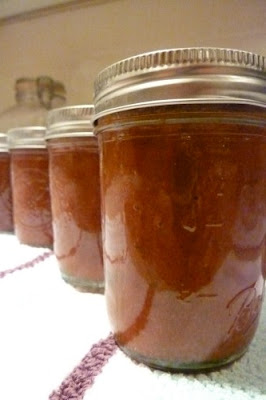
Jars of pizza sauce cooling.
Jars of pizza sauce cooling. Happiness and contentment.
Canning is not an easy task, there is preparation to be done including picking, washing, cutting, and maybe cooking. There is lively discussion, "Is that Basil or Parsley?" "Should the water be boiling when the jars go in, or just simmering?" And finally waiting for that tell-tale pop from each lid that indicates a jar is sealed, and that all the work that went into it was successful. The best part about canning is the feeling of satisfaction. Satisfaction that you have filled a basic need. Satisfaction that in the dark and cold of February you can open a jar of pears that you canned in the fall and those pears remind you that spring must come again and it is not so far away.

When the canning is finished and the equipment washed there is a contentment and peacefulness found in contemplating the jars cooling on the counter. Canning is a positive act that engages the best human characteristics: nurturing a garden, caring for living beings, patience as the plants grow, skilled work processing the produce in the jars, storing the food for the future, and finally enjoying the hard work when a jar is opened. In closing I must thank my parents for my introduction to canning; even the memory of those days when I came home from school and the house was filled with an almost over-powering smell of vinegar because relish was being canned has not been enough to prevent me from doing the same (canning that is, not making relish).